
Economic Damages in a Wrongful Death Claim: A Family Guide
Key Takeaways:
- Economic damages compensate for tangible, measurable financial losses, not emotional suffering.
- Medical bills before death, funeral and burial costs, and lost household services are all recoverable.
- Most states, including New York, do not cap economic damages, though rules vary widely.
- Insurance companies frequently undervalue future losses, so documentation and expert analysis matter.
When a family loses a loved one to another party's negligence, grief arrives alongside a sudden financial shock. Mortgage payments, childcare, and daily bills do not pause. Recovering the economic damages of a wrongful death claim is how the law attempts to restore that lost financial foundation. If you are trying to understand your rights, our guidance for families seeking justice explains where these cases begin and what recovery can look like.
These losses are not abstract. Among cases where plaintiffs prevailed at trial, the median wrongful death award reached roughly $961,000 in BJS data, a figure driven largely by lost earnings and future support. For families in Niagara Falls, NY, and across Western New York, understanding how those numbers are built is the first step toward a fair outcome.
What Are the Economic Damages in a Wrongful Death Claim?
The phrase “economic damages in a wrongful death claim” refers to the objectively calculable financial harm a family experiences because of a death caused by negligence. These are the losses you can attach a dollar figure to using bills, pay stubs, tax returns, and benefit statements.
Courts generally divide wrongful death compensation into two buckets: “economic” damages, which are measurable, and “non-economic” damages, which address grief, companionship, and emotional suffering. Economic damages are easier to quantify precisely because they rely on financial documents rather than subjective judgment. To see how these categories fit alongside other recovery in accident cases, our overview of financial compensation and damages types provides helpful context.
The Categories of Financial Loss You Can Recover
Economic damages are not a single number. They are assembled from several distinct categories, each supported by its own evidence. The table below outlines the most common components families pursue.
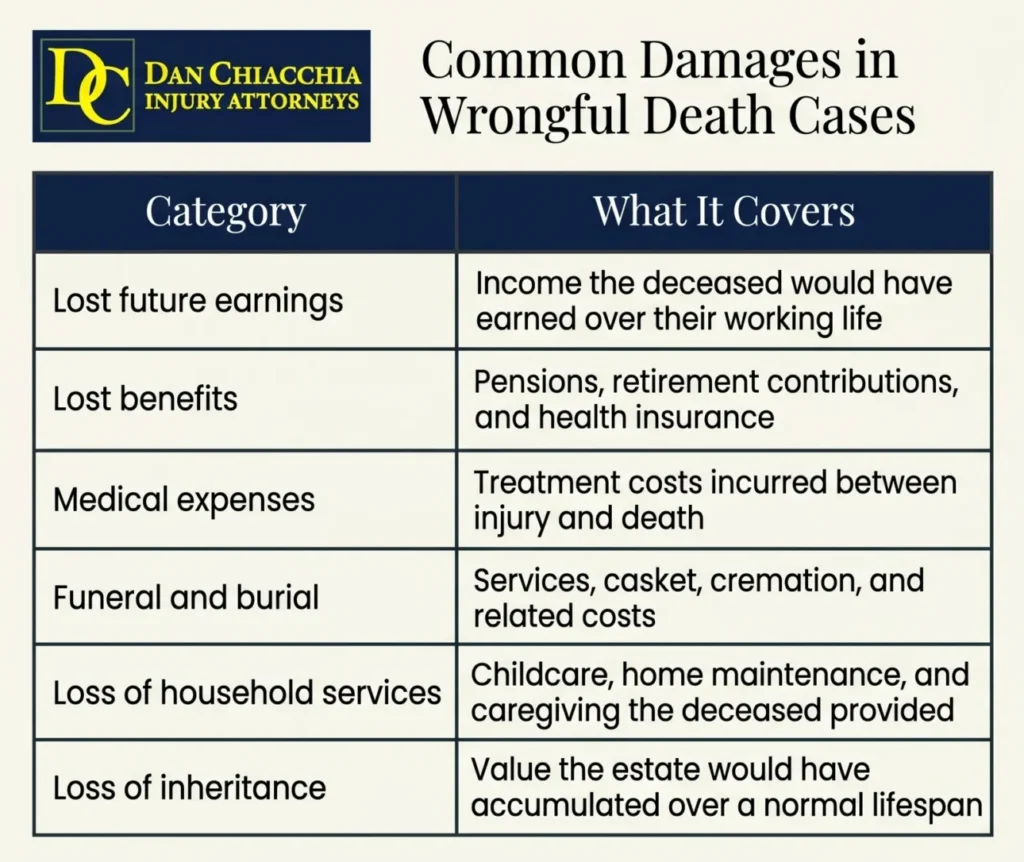
Two categories tend to dominate the total. The loss of future income is frequently the single largest figure, especially when the deceased was a primary breadwinner. The value of household services, often overlooked, can be substantial when the person provided childcare or ran the household.
How Economic Damages Are Calculated
Consider a 40-year-old parent earning a steady salary who dies in a preventable collision. Calculating their lost earnings is not simply salary multiplied by remaining years. Economists project raises, promotions, benefit contributions, and inflation, then reduce the total to present value.
This is why expert testimony is central to these cases. Forensic economists and actuaries build detailed models using the deceased's age, health, earning capacity, and life expectancy. Juries and judges weigh these projections alongside the personal circumstances of the survivors who depended on that support.
Because so much money can hinge on how future losses are modeled, the way a settlement is ultimately paid also matters. Some families receive a lump sum, while others benefit from a structured arrangement; our breakdown of structured settlements and compensation explains how those payment options work.
Economic vs. Non-Economic Damages and the Question of Caps
The distinction between the two categories carries real financial consequences. A family whose loved one was elderly and retired may have modest economic damages but significant non-economic damages. A young professional supporting children may generate very high economic damages from lost future income.
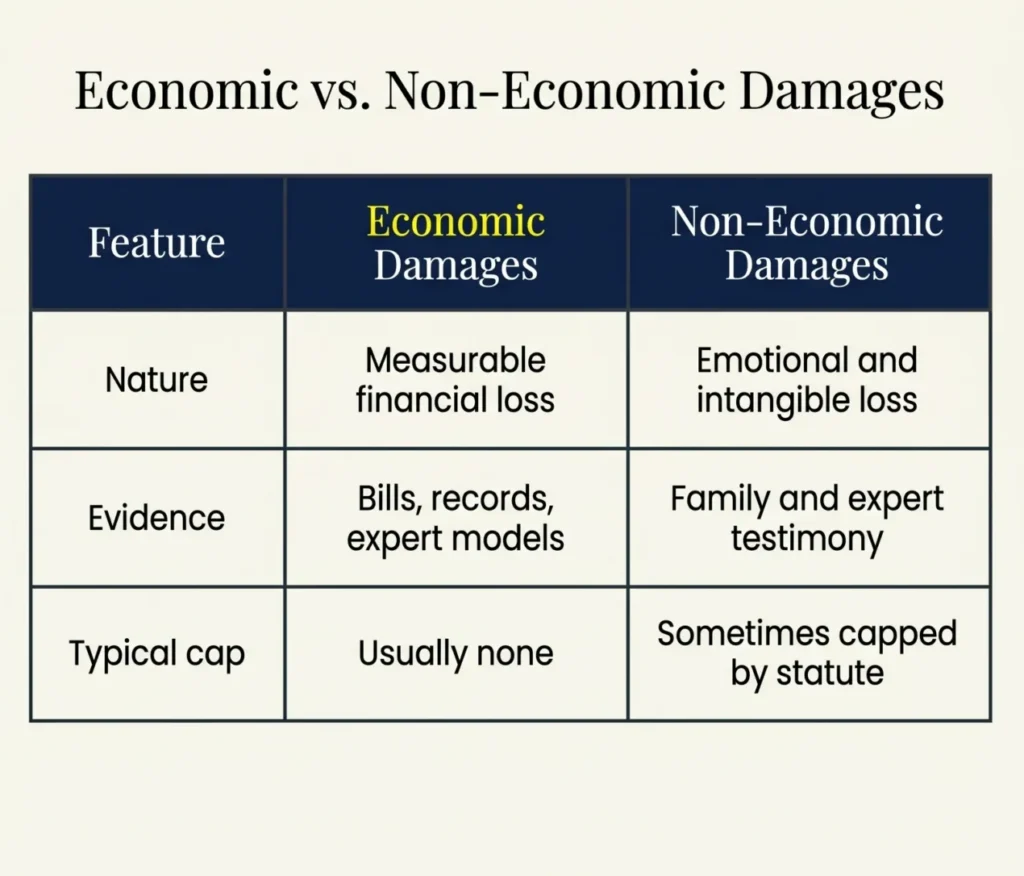
State law shapes recovery dramatically. As of 2026, roughly 28 states maintain some form of medical malpractice damage caps, though these limits usually target non-economic losses
rather than measurable financial ones. New York is among the states with no statutory cap on wrongful death damages.
Economic damages are rarely limited. As legal resources note, there is generally no limit on economic damages, even in states that cap emotional-loss awards. This is one reason careful documentation of every financial loss is so valuable to a family's recovery.
Why Accident and Workplace Deaths Drive These Claims
Wrongful death claims most often arise from preventable events: car and truck collisions, medical errors, unsafe premises, and fatal workplace incidents. The economic impact of each can be severe, because these deaths frequently strike people still in their earning years.
Workplace deaths illustrate the scale. According to the Bureau of Labor Statistics, there were 5,070 fatal work injuries recorded in the United States in 2024. Many of these families face the loss of a primary income, which is precisely the type of loss economic damages are designed to address.
For families in Niagara Falls, NY, the specific cause of death shapes both liability and the categories of financial loss available. A fatal truck crash may involve multiple responsible parties, while a workplace death may raise third-party negligence questions beyond a standard claim.
How Insurers Approach Wrongful Death Valuations
Insurance companies rarely dispute a funeral bill. Where they push back is on the large, projected figures: future earnings, benefits, and household services. These are the numbers that determine whether a settlement truly supports a grieving family.
Adjusters may argue for lower income projections, shorter work-life expectancy, or reduced value for household contributions. Understanding how insurers undervalue injury claims helps families recognize a low offer for what it is. Strong economic documentation and credible expert testimony are the most effective counterweights to those tactics.
Bringing the Financial Picture Into Focus
Recovering the economic damages of a wrongful death claim requires more than adding up bills. It demands a complete accounting of lost income, benefits, services, and future support, backed by records and qualified experts. Because most states, including New York, do not cap these measurable losses, thorough documentation directly shapes what a family ultimately receives. If you are facing this process, prioritize preserving pay records, benefit statements, and receipts early, and consult professionals who can model the full scope of your loss.
Take Action With Dan Chiacchia Injury Attorneys
No family should have to reconstruct a lifetime of lost income while grieving. When a preventable death upends your household finances, you deserve a team that documents every recoverable loss and stands firm against a low insurance offer. Our team in Niagara Falls, NY, and across Western New York brings more than 30 years of local experience to that fight.
If you are seeking compensation, contact our lawyers at Dan Chiacchia Injury Attorneys. For a free case review, call today at 716-648-3030 or complete our online contact form. Located in Hamburg, New York, we proudly serve clients in all of western New York. Learn how we pursue wrongful death compensation for economic losses with a contingency-based approach and no upfront legal fees unless we win your case.
Frequently Asked Questions (FAQs):
What is the difference between economic and non-economic damages?
Economic damages cover measurable financial losses such as lost income, medical bills, and funeral costs. Non-economic damages compensate for intangible harm like grief and loss of companionship. Both are often awarded together in a single wrongful death case.
Is lost future income really recoverable after a death?
Yes. Surviving family members who relied on the deceased for financial support may recover the income that person would reasonably have earned. Economists project these earnings across the working life and reduce the total to present value.
Are economic damages capped in New York?
New York does not impose a statutory cap on wrongful death damages, and economic losses are generally not limited even in states that cap emotional-loss awards. Because rules vary widely, it is wise to confirm your specific situation with a lawyer.
How do I prove economic damages?
You prove them with documentation such as pay stubs, tax returns, benefit statements, medical bills, and funeral receipts. Expert witnesses, including forensic economists, then build projections for future losses. Strong records are essential to maximizing recovery.
Can Dan Chiacchia Injury Attorneys help calculate these losses?
Yes. Our team investigates the facts, gathers financial evidence, and works with experts to value the full scope of your loss. We handle negotiations with insurers so you can focus on healing, with no upfront legal fees unless we win.
